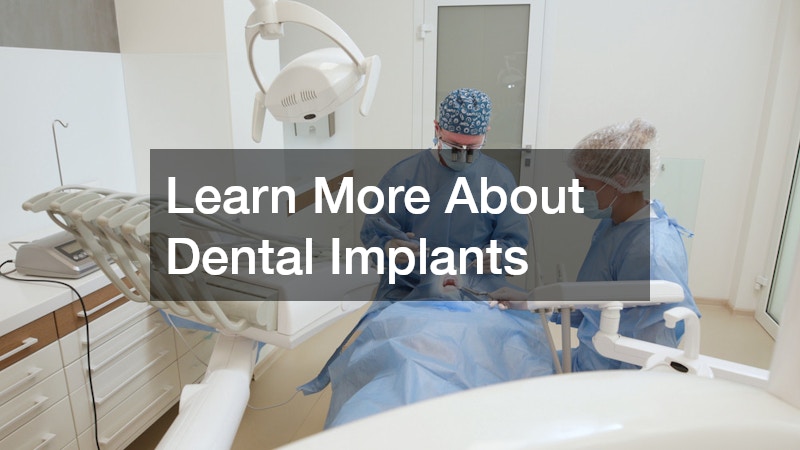
Dental implants are a common option for replacing missing teeth and restoring function to a person’s smile. Unlike removable dentures, implants are designed to become a stable part of the mouth by using a post that is placed into or around the jawbone. Once the area has healed, the implant can support a crown, bridge, or denture.
There is more than one type of dental implant, and the right choice depends on factors such as the number of missing teeth, jawbone health, oral health, and treatment goals. Understanding the different options can make it easier to have an informed conversation with a dentist about which approach may be appropriate.
Endosteal Implants
Endosteal implants are among the most commonly used types of dental implants. They are placed directly into the jawbone and are typically made from titanium or another biocompatible material.
How Endosteal Implants Work
During treatment, the implant post is surgically positioned in the jawbone. The surrounding bone gradually heals around the implant, helping create a stable foundation. After healing, an abutment is attached to the implant, followed by the final dental restoration.
Endosteal implants can be used to replace a single tooth, several teeth, or even support a full arch of replacement teeth. Patients usually need sufficient healthy jawbone to support the implant properly.
When They May Be Recommended
A dentist may recommend endosteal implants when a patient has adequate bone density and healthy gums. If bone loss has occurred, procedures such as bone grafting may sometimes be considered before implant placement.
Because they are placed within the bone, endosteal implants can provide stability that closely resembles the support provided by natural tooth roots.
Subperiosteal Implants
Subperiosteal implants are positioned differently. Instead of being inserted into the jawbone, they are placed underneath the gum tissue and rest on or above the bone.
How Subperiosteal Implants Differ
These implants typically use a metal framework designed to fit over the jawbone. Posts connected to the framework extend through the gum tissue and provide support for replacement teeth.
Subperiosteal implants are less commonly used today because advances in bone grafting and implant technology have made traditional implant placement possible for more patients. However, they may still be considered in certain circumstances.
Who May Benefit From This Option
Patients who have experienced significant bone loss and are not candidates for bone grafting may be evaluated for alternative implant designs. A dentist or oral surgeon will review imaging, medical history, and bone structure before recommending this type of treatment.
Single-Tooth Implants
When only one tooth is missing, a single implant can often be used to replace it without relying on neighboring teeth for support.
Replacing One Missing Tooth
A single implant generally consists of an implant post, an abutment, and a custom dental crown. The crown is designed to match the size, shape, and appearance of surrounding teeth.
One advantage of this approach is that nearby healthy teeth do not usually need to be reshaped, as they might with a traditional dental bridge. The implant also helps provide stimulation to the jawbone in the area where the natural tooth root is no longer present.
Implant-Supported Bridges
Several missing teeth in the same area may be replaced with an implant-supported bridge.
Supporting Multiple Replacement Teeth
Instead of placing an implant for every missing tooth, a dentist may position implants at selected locations to support a bridge. The replacement teeth between the implants are connected as part of the restoration.
This approach can reduce the number of implants required while still creating a stable solution for multiple missing teeth. The exact number and placement of implants will depend on the location of the missing teeth and the condition of the jawbone.
Implant-Supported Dentures
Dental implants can also be used to stabilize dentures for patients who are missing most or all of their teeth.
Improving Denture Stability
Traditional dentures rest on the gums and may move during eating or speaking. Implant-supported dentures connect to implants placed in the jaw, which can provide additional stability.
Depending on the design, the denture may be removable by the patient or fixed in place and removed only by a dental professional. Implant-supported options may make it easier for some patients to chew and speak comfortably.
Full-Arch Implant Restorations
Patients who need to replace an entire upper or lower arch of teeth may be candidates for a full-arch implant restoration.
Using Several Implants for a Full Smile
Full-arch treatment uses several strategically positioned implants to support an entire row of replacement teeth. The number of implants required varies depending on bone structure, restoration design, and the dentist’s treatment plan.
This method can provide a fixed alternative to traditional removable dentures. Because the restoration is supported by implants, patients may experience improved stability when eating and speaking.
Choosing the Appropriate Implant Type
No single implant option is appropriate for everyone. A dentist will typically evaluate the condition of the gums, remaining teeth, jawbone, bite, and overall health before developing a treatment plan.
Factors That Influence Treatment
Bone density is especially important because dental implants rely on strong support from the jaw. The location and number of missing teeth also affect which type of restoration may work best. Smoking, certain health conditions, gum disease, and oral hygiene habits may also influence treatment recommendations and healing.
Dental imaging can help the dentist evaluate available bone and identify important structures before planning implant placement.
Learning More About Dental Implants
The different kinds of dental implants provide options for replacing anything from a single missing tooth to an entire arch. Endosteal implants are widely used, while implant-supported bridges, dentures, and full-arch restorations allow treatment to be adapted to different levels of tooth loss.
A dental evaluation is the best way to determine which option fits a patient’s needs. By reviewing jawbone health, missing teeth, oral health, and long-term goals, a dentist can recommend a treatment plan designed to restore both function and appearance.